

As solar-assisted transportation matures, one innovation is clearly redefining electric trike design: Adaptive Solar Mobility Systems.
Unlike static solar charging setups, these systems intelligently adjust energy capture, distribution, and usage in real time—delivering smarter, longer, and more reliable rides.
Below are 8 breakthrough advantages making adaptive solar systems essential for next-generation electric trikes.
How Adaptive Solar Mobility Systems Transform Electric Trikes
Adaptive Solar Mobility Systems Optimize Solar Capture
Panel angle, exposure time, and power intake automatically adjust based on riding speed and sunlight conditions, maximizing usable energy.
Adaptive Solar Mobility Systems Balance Battery Load
Energy flows dynamically between solar input and battery reserves, preventing overcharging and reducing long-term battery degradation.
Adaptive Solar Mobility Systems Extend Daily Riding Range
By supplementing battery power throughout the ride, these systems add meaningful extra mileage without requiring plug-in charging.
Adaptive Solar Mobility Systems Improve Power Consistency
Riders experience smoother acceleration and fewer power drops, especially during stop-and-go urban riding.
Adaptive Solar Mobility Systems Reduce Energy Waste
Excess solar energy is intelligently redirected to auxiliary systems like lighting, displays, and safety modules.
Adaptive Solar Mobility Systems Support All-Weather Riding
Even under partial cloud cover, adaptive algorithms extract usable energy more efficiently than traditional systems.
Adaptive Solar Mobility Systems Enhance Component Lifespan
Lower battery stress and balanced power flow extend the lifespan of motors, controllers, and batteries.
Adaptive Solar Mobility Systems Enable Smarter Mobility Design
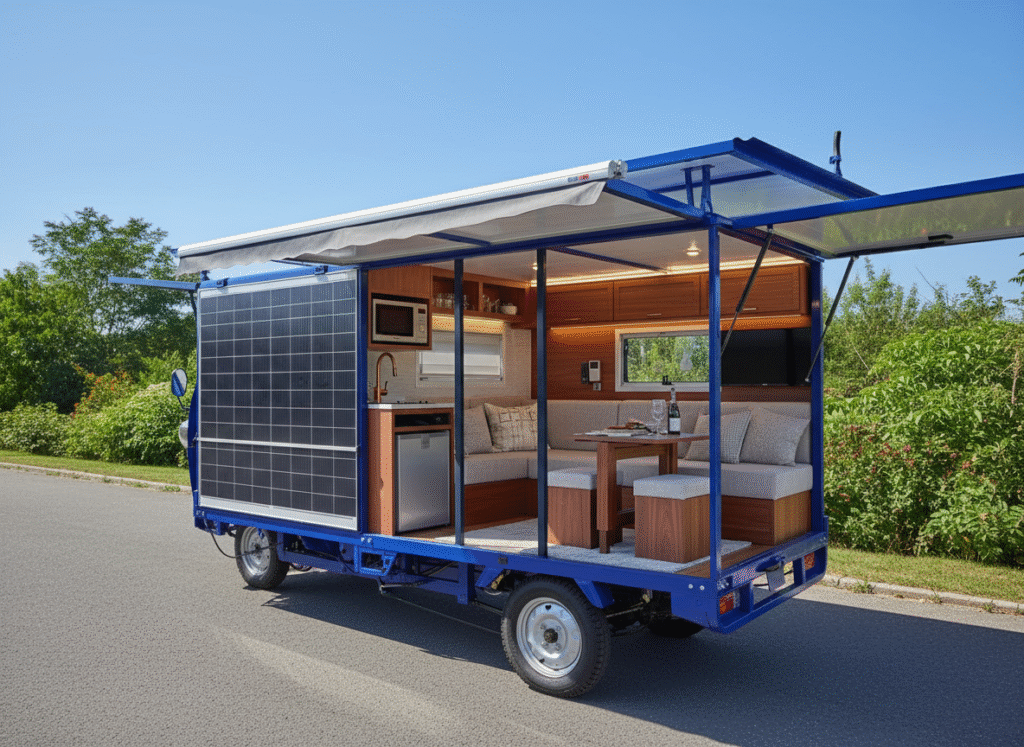
These systems integrate seamlessly with folding frames and compact trike layouts—ideal for urban and off-grid use.
Why ELEVEV Trikes Benefit Most from Adaptive Solar Mobility Systems
ELEVEV’s solar folding electric trikes are designed around efficiency, portability, and independence.
When combined with Adaptive Solar Mobility Systems, riders gain:
- Longer rides with fewer charging interruptions
- More predictable performance
- Lower long-term operating costs
- Greater energy independence

FAQ — Adaptive Solar Mobility Systems
What makes adaptive solar systems different from standard solar charging?
Adaptive systems dynamically adjust energy capture and distribution instead of relying on fixed solar input.
Do Adaptive Solar Mobility Systems work while riding?
Yes. They continuously manage solar energy during movement, not just when parked.
Are these systems compatible with folding electric trikes?
Absolutely. They are specifically designed for compact and foldable mobility platforms.
Do Adaptive Solar Mobility Systems help battery longevity?
Yes. Balanced charging significantly reduces battery stress over time.
Are these systems suitable for daily commuting?
Yes. They are ideal for daily riders seeking extended range and lower charging dependency.

Ready to experience intelligent solar power in motion?
Discover how ELEVEV integrates Adaptive Solar Mobility Systems into its solar folding electric trikes.
👉 Explore ELEVEV Solar Trikes Now